

Earth Day is an annual event and nonprofit organization dedicated to raising awareness about the importance of protecting the environment. It’s a reminder about sustainability and an invitation to take part in preserving our planet.
Earth Day has become an influential global movement that encourages us to protect the place we call home, involving organized community cleanups, demonstrations, and education. Since 1970, we celebrate this special day each year on April 22. But what does Earth Day have to do with climate change? Read on to learn more.
Is Climate Change Part of Earth Day?
Earth Day has become the largest secular observance in the world. Shortly after it gained global support, the 1992 UN Earth Summit was held. On Earth Day 2000 (its 40th anniversary), the issues of global warming and cleaner energy sources came to the forefront.
Today, the climate crisis is at the heart of all environmental action, and Earth Day has paved the way for the public to become aware of the severe problem that global warming involves. Already focused on opposing environmental degradation, Earth Day also provides significant opportunities to educate people about the impacts of climate change and encourage them to take climate action.
What Is the Theme for Earth Day 2022?
As themes go, Earth Day 2022 is a good one: “Invest In Our Planet.” The aim is to motivate folks to act boldly, innovate broadly, and implement equitably.
What Are the Issues That Earth Day Focuses on Concerning Environment Preservation?
While Earth Day is concerned with environmental preservation in general, it focuses specifically on the following issues:
- Climate change
- Pollution
- Deforestation
- Water scarcity
- Loss of biodiversity
- Soil erosion and degradation

How Does the Earth Contribute to Climate Change?
While there have been significant variations in the Earth’s climate over its estimated 4.54 billion year existence, climate science research indicates that the current environment is changing faster than historical geological records have shown. For example, the NASA Earth Observatory reports that the hottest-ever recorded temperature in Antarctica occurred on February 6, 2020.
Several natural factors contribute to the Earth’s changing climate, including the sun, volcanic emissions, changes in the Earth’s orbit, ocean currents, and carbon dioxide levels.
The Sun
The sun’s energy output is inconsistent, and therefore the solar energy that comes through our atmosphere and reaches the Earth’s surface varies.
Volcanic Emissions
When volcanoes erupt, they release gases and particles (dust and ash) into the atmosphere. Depending on how the sunlight interacts with this material, the temperature of the Earth’s surface can increase or decrease. As a result, volcanic gases such as sulfur dioxide have a cooling effect while carbon dioxide has a warming reaction.
Earth’s Orbit
Three factors impact the Earth’s orbit around the sun: eccentricity, axial tilt, and precession. Combining these factors determines the amount of solar heat that reaches the Earth’s surface, thereby influencing our climate.
Ocean Currents
Our oceans transport heat across the planet, and as they absorb heat out of the atmosphere, the temperature of the sea’s surface rises. This affects the ocean’s circulation patterns and the distribution of hot and cold water to different areas around the globe. The water temperature then impacts Earth’s climate accordingly.
Levels of Carbon Dioxide
Suppose the quantity of carbon dioxide in the atmosphere increases. Earth’s temperature rises, which causes the oceans to get warmer. While the oceans can remove carbon dioxide from the atmosphere when they are cool, their ability to do so decreases as they warm. When the oceans’ temperatures rise, they release carbon dioxide into the atmosphere, which again raises the Earth’s temperature. The bigger the carbon dioxide content in the atmosphere, the warmer the planet.
There are also other natural factors such as plate tectonics and meteorites that affect climate. Still, since tectonic movement occurs so slowly and meteorite activity rarely affects the world, their impact is less substantial.
How Do People Contribute to Climate Change?
 source
Although nature Earth processes contribute to climate change, human activities escalate the problem.
By burning fossil fuels, farming livestock, and cutting down forests, we negatively impact our air quality and release large volumes of greenhouse gases into the atmosphere. This in turn increases the global average temperature. As a result, global warming is rising at a rate of 0.2°C (32.36°F) every 10 years. The ultimate aim is to work toward net-zero, which would mean that humans no longer contribute to global warming.
The Greenhouse Effect
The greenhouse effect is our biggest concern when it comes to climate change. Certain gases such as carbon dioxide, methane, nitrous oxide, and fluorinated gases create a canopy in the atmosphere that prevents the sun’s heat from releasing back into space – and its effect is much like the glass covering a greenhouse.
This image illustrates the greenhouse effect. When the heat from the sun is trapped in the atmosphere, it leads to global warming.
Air pollution is the most significant contributor to global warming, and it’s primarily due to the vast volumes of carbon dioxide that our industrial activities release into the atmosphere. Since the Industrial Revolution, atmospheric carbon dioxide concentrations have increased by 48%.
Activities That Produce Greenhouse Gases
Here are examples of the activities that cause greenhouse gas emissions:
- Burning of fossil fuels: These processes produce carbon dioxide and nitrous oxide.
- Deforestation: Trees absorb carbon dioxide from the atmosphere, which helps to regulate the climate. We hinder this all-important process when cutting down trees on a mass scale (often for land use). Because carbon dioxide causes temperatures to rise, the Earth warms up.
- Livestock farming: Large amounts of methane are produced when cows and sheep digest their food.
- Using fertilizers that contain nitrogen: These substances produce nitrous oxide.
- Using equipment and products that use fluorinated gases: These gases have a severe warming effect that’s up to 23,000 times more than carbon dioxide.
Founded in 1988, the Intergovernmental Panel on Climate Change (IPCC) is a United Nations body officially responsible for raising awareness and advancing knowledge on human-induced climate change. They are currently in the process of issuing their sixth assessment report.

What Are the Consequences of Climate Change?
There are direct and indirect consequences of the climate change caused by humans. Both have detrimental effects on the environment and public health.
Direct Effects of Climate Change
- Rising maximum and minimum temperatures
- Higher ocean temperatures
- Sea level rise
- Increase in heavy precipitation (rain and hail)
- More frequent extreme weather events such as tropical cyclones
- Increase in aridity and drought
- Declining snow cover and Arctic sea ice
- Breakdown of glaciers
- Melting ice sheets in Greenland and Antarctica
- Thawing permafrost (ground that remains below 0°C/32°F for two years or more)
Indirect Effects of Climate Change
- Decrease in food and water supplies, especially in developing countries
- Increase in floods and wildfires (damaging to ecosystems)
- More frequent and intense heatwaves
- Economic impacts due to land and infrastructural damage
- More rapidly spreading of pests and pathogens (threatens human health)
- Biodiversity loss because of limited adaptability of fauna and flora
- Ocean acidification due to higher levels of carbon dioxide
What Actions Help Fight Climate Change?
 source
Various actions could help slow down climate change. Here’s a quick rundown.
Renewable Energy
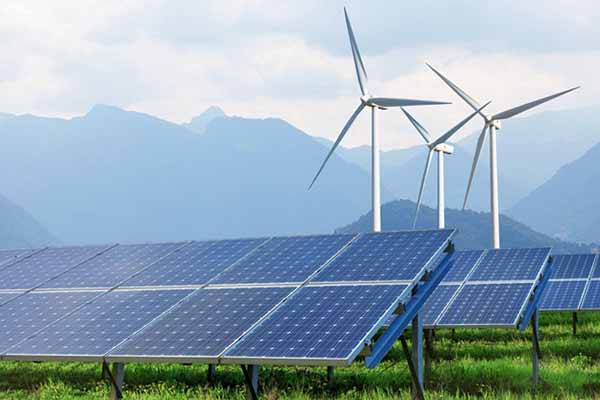
To begin, we can systematically replace our primary, fossil fuel burning energy sources. In contrast to fossil fuels, solar power, wind, geothermal, and biomass are renewable and clean energy sources that would reduce our carbon footprint.
Sustainable Transportation
We can adopt new, eco-friendly transportation methods. For example, we can reduce our carbon footprint by switching from fuel-operated to zero-emissions vehicles.
Air Pollution Prevention
Reducing fossil fuels and putting restrictions on industry emissions will help us reduce air pollution.
Recycling and Waste Management
We need to reconsider our consumption patterns and adapt our production methods. It is every individual’s responsibility to limit their use of non-degradable materials and recycle and repurpose where possible.
Sea and Ocean Preservation
Our oceans absorb greenhouse gases, which leads to ocean acidification, harming marine life. Along with reducing our carbon dioxide emissions, we should prevent overfishing and unsustainable development in coastal areas.
What Are Some of the Environmental Problems That Inspired Earth Day?
Before the institution of Earth Day, environmental pollution was the norm as people were unaware of the harm we were doing to the planet. But in January 1969, a massive oil spill on the coast of Santa Barbara drew widespread attention to the problem of pollution.
During the 11-day oil spill, three million gallons of oil escaped into the ocean, spreading over 35 miles. As a result, an estimated 9,000 sea birds were killed. As a result, several politicians, including the founder of Earth Day, Senator Gaylord Nelson, visited the site and came up with the idea of instituting nationwide teach-ins on the environment. This concept eventually led to the first-ever Earth Day in 1970.
But even before the oil spill catastrophe, people were beginning to question the idea that pollution was an unattractive yet necessary trade-off for an industrializing world. The changing attitude was partly due to scientists’ increasing willingness to discuss environmental issues publicly.
In addition, Rachel Carson’s 1962 culture-shifting book “Silent Spring” put the spotlight on the adverse environmental effects of pesticides. Thus, throughout the 1960s, the public became far more aware of the dangers of environmental degradation.
How Has Earth Day Changed the Environment?
 source
In 1970 (Earth Day’s inception), the Environmental Protection Agency (EPA) was established along with several environmental policies:
- Clean Air Act
- Clean Water Act
- Endangered Species Act
- Toxic Substances Control Act
- Surface Mining Control
- Reclamation Act
While we have made significant progress in terms of limiting air pollution, the problem of climate change has worsened. Below is a breakdown of the advances and regressions that have been made in the U.S.
Climate
Despite many efforts, our nation’s carbon dioxide emissions have increased steadily over time. In 1970, the carbon dioxide concentration in the atmosphere was 325 ppm (parts per million) compared to 410 ppm in 2019.
Since this gas is directly linked to heat production, our global temperatures have risen by about 1°C (33.8°F) since the industrial revolution. Following the 2015 Paris climate accord, nations have agreed to restrict the warming to a maximum of 2°C (35.6°F) above pre-industrial levels, although below 1.5°C (34.7°C) was the goal.
Nevertheless, at the current rate of carbon dioxide production, we will not achieve this goal. Thus, during the 26th UN Climate Change Conference in Glasgow in 2021, world leaders decided that they would revise the emissions agreement.
Air Pollution
Since Earth Day, there has been a significant decrease in air pollution. Most notably, there have been reductions in nitrogen dioxide, sulfur dioxide, and lead. However, there is concern that this progress might have been hampered when, under the Trump administration, the EPA eased the restrictions on air pollution.
Water
Around 11 million citizens get their drinking water from Lake Erie. Still, the periodic rise in phosphorus levels increases toxic algal blooms, which are harmful to people and animals and destroy natural habitats.
Moreover, the heightened phosphorus concentration is mainly due to farming practices, and researchers are still trying to find a sustainable solution. On the other hand, Lake Michigan is vulnerable to pollutants called polychlorinated biphenyls (PCBs), linked to cancer and other public health issues.
While chemical concentrations have declined, some states still warn people to limit their fish intake from the lake.
Waste
Today, the average U.S. citizen produces 4.5 pounds of waste daily. To make matters worse, the waste primarily consists of plastics. Although people have become more aware of the importance of recycling and composting, nearly 140 million tons of waste still ends up in landfills.
However, this is still an improvement from the 145.3 million tons of garbage that we dumped in landfills in 1990.
Earth Day and Climate Change – We Can All Do Our Part
Despite the progress we’ve made, we still have a long way to go to curb environmental decline and slow down the changing climate. Earth Day is an opportunity to refocus on these important issues that don’t just affect a few of us, but all of us. By making small changes we can make a big difference.
Brought to you by justenergy.com
All images licensed from Adobe Stock.
Featured image: